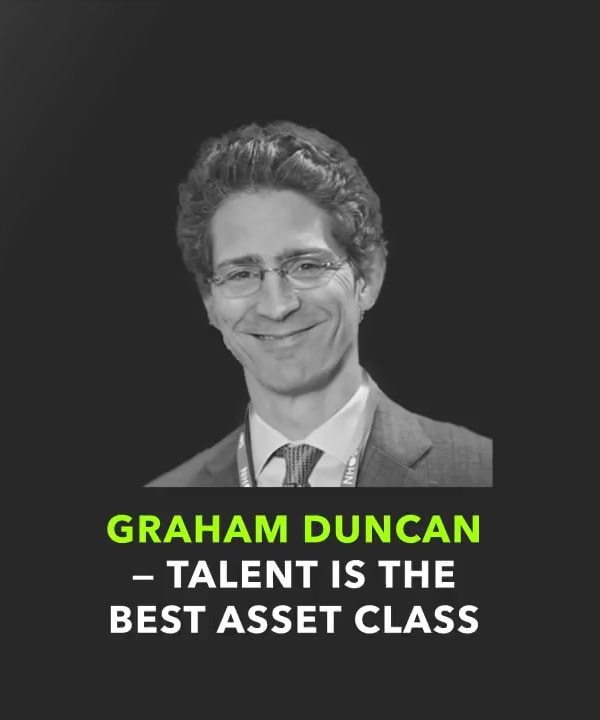
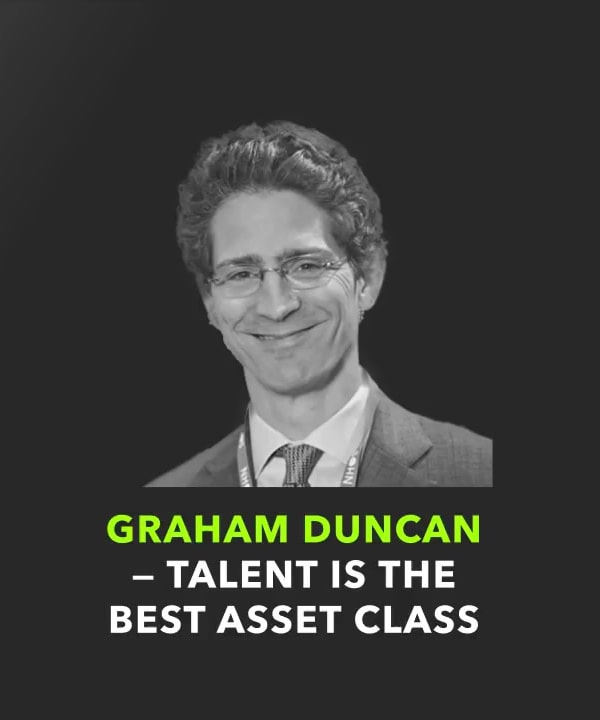
Graham Duncan — Talent Is the Best Asset Class | The Tim Ferriss Show (Podcast)

Topics covered
Popular Clips





Questions from this episode
- Asked by 96 people
- Asked by 26 people
- Asked by 18 people
- Asked by 14 people
- Asked by 7 people
- Asked by 7 people
Episode Highlights
Bias Awareness
Recognizing and mitigating personal biases is crucial for effective decision-making. shares insights on how mindful beliefs can help uncover hidden assumptions, drawing inspiration from Byron Katie's teachings. He emphasizes the importance of questioning beliefs and understanding their impact on our actions. adds that evaluating investment decisions requires awareness of biases, much like the complementary dynamic between Warren Buffett and Charlie Munger, where each offsets the other's biases 1.
I think her thing of what's the belief is it true. What's the opposite of that? Can you absolutely know it's true? How do you feel when you think that thing?
---
Duncan also highlights the role of coaches in surfacing hidden assumptions, which can significantly influence decision-making processes 2.
Mindfulness
Integrating mindfulness into daily life can enhance awareness and reduce stress. reflects on conversations with mindfulness teachers like Jack Kornfield, noting the importance of being present and appreciating life's fleeting moments. shares his practice of cherishing time with his children, inspired by the idea that "the days are long but the years are short" 3.
How much would I pay at sort of age 80, 90, looking back on my life, how much would I pay to relive this moment right now?
---
This mindfulness approach encourages embracing emotions and experiences as they come, fostering a deeper connection to the present 4.
Mental Growth
Developing mental complexity is essential for navigating adult development and decision-making. discusses Bob Keegan's theory, which emphasizes increasing mental complexity by making previously subconscious assumptions more explicit. He shares how recognizing his own biases, such as a tendency towards futurism, has helped him approach investments more objectively 5.
If a coach can find what you're gripping really tightly and that you can't articulate the opposite of this belief you have, that might be a sign that you have identity or ego caught up in that thing.
---
Embracing discomfort, as Josh Waitzkin suggests, can also be a tool for growth, encouraging individuals to face challenges head-on and develop resilience 6.
Related Episodes


Tim Ferriss: How to Learn Better & Create Your Best Future | Huberman Lab Podcast
Answers 383 questions
Dr. Adam Grant: How to Unlock Your Potential, Motivation & Unique Abilities
Answers 383 questions
David Goggins: How to Build Immense Inner Strength
Answers 383 questions
Dr. Cal Newport: How to Enhance Focus and Improve Productivity
Answers 383 questions
Morgan Housel: Understand & Apply the Psychology of Money to Gain Greater Happiness
Answers 383 questions
Rick Rubin: How to Access Your Creativity | Huberman Lab Podcast
Answers 383 questions
Chris Voss: How to Succeed at Hard Conversations | Huberman Lab Podcast
Answers 383 questionsHow To Build Endurance In Your Brain & Body | Huberman Lab Podcast #23
Answers 383 questions