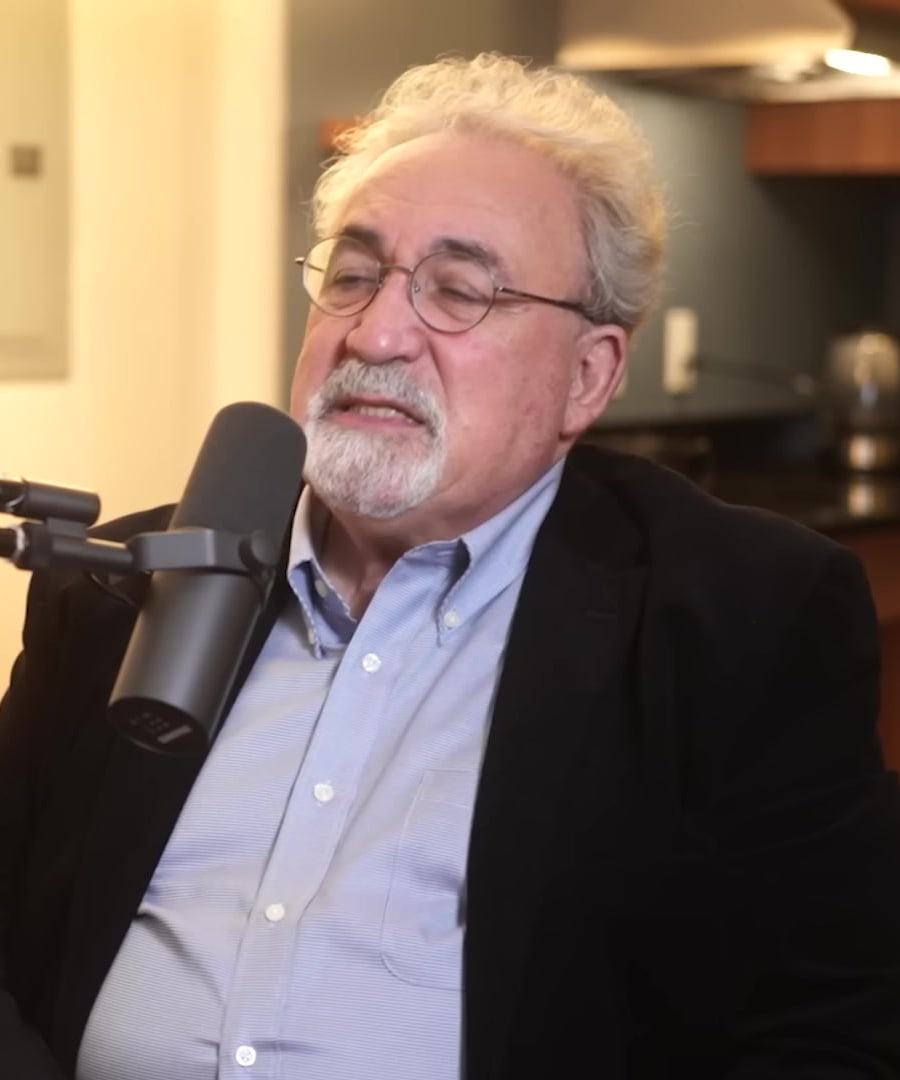
Abbas Amanat: Iran Protests, Mahsa Amini, History, CIA & Nuclear Weapons | Lex Fridman Podcast #334

Topics covered
Popular Clips




Questions from this episode
- Asked by 11 people
Episode Highlights
Supreme Leader
The Supreme Leader in Iran wields significant power, overshadowing the president and other governmental roles. explains that while the president, like Ahmadinejad, may be more visible internationally, the Supreme Leader remains the true authority, controlling all state institutions 1. This structure is enshrined in the constitution, with the Supreme Leader acting as a guardian jurist, a role that places him above the state and free from electoral accountability 2.
The Supreme Leader tries to keep himself out of issues of everyday politics, supposedly, but therefore he is not coming to United Nations to give a speech during the session.
---
Despite the presence of a council of experts, the Supreme Leader's power remains largely unchecked, making him the focal point of both governance and public criticism.
Governance
The governance of the Islamic Republic is marked by a complex interplay between religious authority and state power. highlights how the Revolutionary Guards, a powerful military force, play a crucial role in maintaining the regime's control, often acting independently from the regular army 3. This theocratic governance has led to significant societal changes, including a massive brain drain as the secular middle class finds itself marginalized 4.
The emergence of this new power gradually isolated or marginalized the secular middle class who could not survive under that regime.
---
The Revolutionary Guards' influence extends into various sectors, including industry and infrastructure, further entrenching their power and the regime's authoritarian nature 5.
Related Episodes


Dr. Lex Fridman: Machines, Creativity & Love | Huberman Lab Podcast #29
Answers 383 questionsTools for Managing Stress & Anxiety | Huberman Lab Podcast #10
Answers 383 questionsAMA #8: Balancing Caffeine, Decision Fatigue & Social Isolation
Answers 383 questionsThe Science & Treatment of Bipolar Disorder | Huberman Lab Podcast #82
Answers 383 questionsUnderstanding & Conquering Depression | Huberman Lab Podcast #34
Answers 383 questionsThe Science of Making & Breaking Habits | Huberman Lab Podcast #53
Answers 383 questionsThe Science of Healthy Hair, Hair Loss and How to Regrow Hair | Huberman Lab Podcast
Answers 383 questionsUnderstanding & Controlling Aggression | Huberman Lab Podcast #71
Answers 383 questions
Dr. Jamil Zaki: How to Cultivate a Positive, Growth-Oriented Mindset
Answers 383 questions