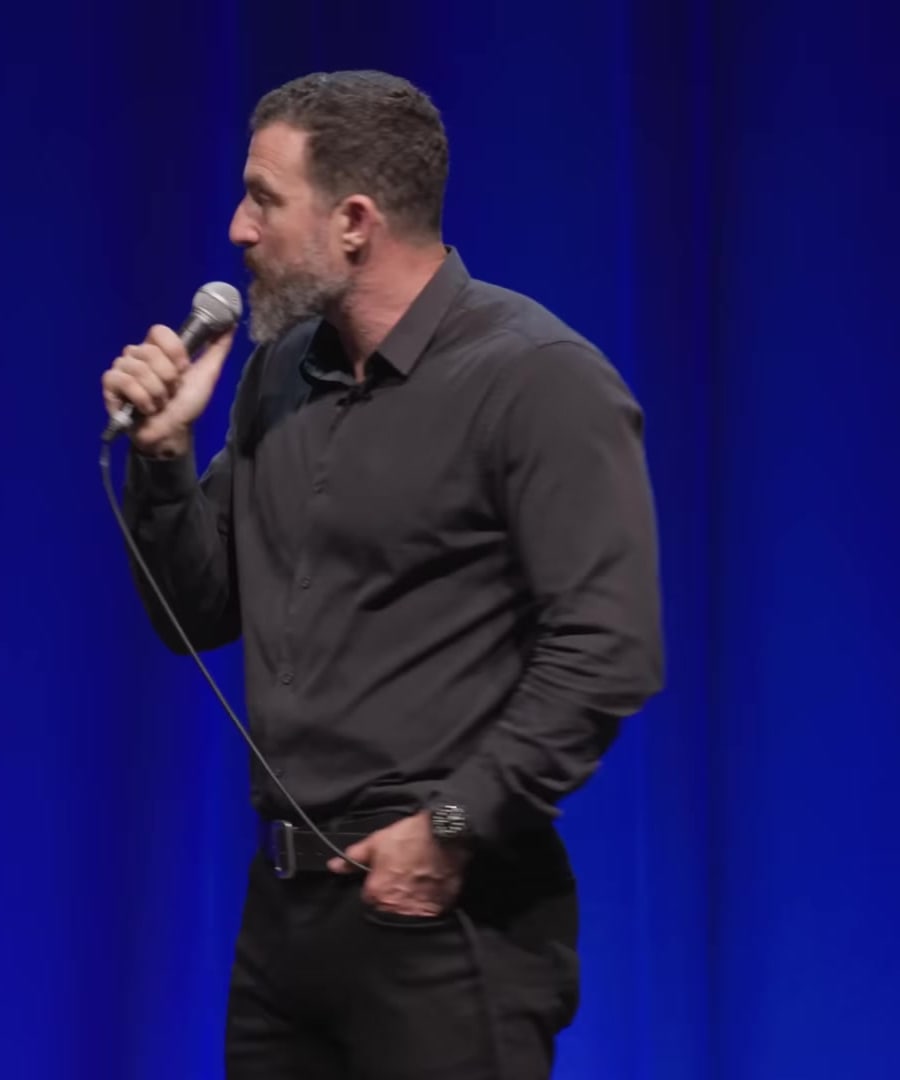
LIVE EVENT Q&A: Dr. Andrew Huberman at the Brisbane Convention & Exhibition Centre

Topics covered
Popular Clips





Questions from this episode
- Asked by 3,193 people
- Asked by 2,215 people
- Asked by 1,940 people
- Asked by 810 people
- Asked by 632 people
- Asked by 383 people
- Asked by 344 people
- Asked by 225 people
- Asked by 219 people
- Asked by 213 people
- Asked by 192 people
- Asked by 179 people
- Asked by 176 people
- Asked by 168 people
- Asked by 163 people
Episode Highlights
Eating Habits
shares his approach to daily eating habits, emphasizing the importance of aligning food intake with alertness levels. He typically starts his day with water and caffeine, followed by a meal around noon, but remains flexible depending on hunger. Andrew enjoys a variety of foods, including meat, eggs, fruits, and vegetables, and humorously dismisses extreme nutrition debates, stating, "If oatmeal were going to kill you, kill me. I'd be dead. I eat so much oatmeal."
I tend to eat according to how alert or asleep I want to be. It violates a few kind of popular thoughts about nutrition, but that's what I do generally, for me.
---
His approach to intermittent fasting is not rigid, allowing for adjustments based on his daily activities and needs 1.
Elimination Diets
Elimination diets, according to , can enhance one's relationship with food by fostering nutrient awareness. He explains that consuming foods in their natural state helps the brain associate taste with nutritional content, leading to more intuitive eating habits. Andrew humorously contrasts his omnivorous diet with extreme diets, noting, "I'm an omnivore like most people. And so for me, between 11:00 a.m. and 08:00 p.m. is typically when I eat."
When you eat foods in their kind of more original form, non processed or minimally processed, it's clear that the brain starts to develop a more specific intuition or appetite for what you need.
---
This intuitive approach allows individuals to better understand their body's needs and avoid highly processed foods 2.
Foundational Nutrition
For foundational nutrition, relies on a combination of whole foods and supplements like AG1 to ensure he meets his nutritional needs. He highlights the importance of micronutrients and adaptogens, especially when whole food consumption is challenging due to travel or a busy schedule. Andrew notes, "By drinking a packet of AG1 in the morning, and oftentimes also again in the afternoon or evening, I'm ensuring that I'm getting everything I need."
I started taking AG1 and I still take AG1 once or twice a day because it gives me vitamins and minerals that I might not be getting enough of from whole foods.
---
This approach supports gut health, immune system health, and overall well-being, making it a cornerstone of his daily routine 3.
Related Episodes

LIVE EVENT Q&A: Dr. Andrew Huberman at the ICC Sydney Theatre
Answers 383 questionsLIVE EVENT Q&A: Dr. Andrew Huberman Question & Answer in Toronto, ON
Answers 383 questionsLIVE EVENT Q&A: Dr. Andrew Huberman Question & Answer in Melbourne, AU
Answers 383 questionsLIVE EVENT Q&A: Dr. Andrew Huberman at the Sydney Opera House
Answers 383 questionsAMA #16: Sleep, Vertigo, TBI, OCD, Tips for Travelers, Gut-Brain Axis & More
Answers 383 questionsAMA #8: Balancing Caffeine, Decision Fatigue & Social Isolation
Answers 383 questionsADHD & How Anyone Can Improve Their Focus | Huberman Lab Podcast #37
Answers 383 questionsMaster Your Sleep & Be More Alert When Awake | Huberman Lab Podcast #2
Answers 383 questionsUsing Science to Optimize Sleep, Learning & Metabolism | Huberman Lab Podcast #3
Answers 383 questions