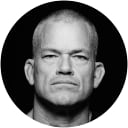
The New Landscape of Leadership || Jeffrey Hull

Topics covered
Popular Clips
Episode Highlights
Evolving Leadership
emphasizes the need for evolving leadership styles in today's complex world. He argues that the traditional alpha leadership model, characterized by authority and directive approaches, is no longer sufficient. Instead, leaders should adopt a flexible portfolio of skills, including empathy, collaboration, and inquisitiveness, to elevate team performance and creativity 1. Jeffrey also highlights the increasing diversity in leadership roles and the importance of being nimble and agile in response to global changes 2.
Developing a flexible portfolio so that leaders can actually choose what's appropriate in the moment or in the situation that will get the best out of everyone.
---
Emotional Intelligence
Emotional intelligence is crucial for effective leadership, according to Jeffrey. He credits Dan Goleman for popularizing concepts like self-awareness, social awareness, and emotional regulation, which are now integral to leadership and coaching 3. Jeffrey explains that leaders must create safe spaces for emotional expression and regulation to foster creativity and collaboration 4.
Emotions are always at play. And what this assessment does is it breaks it down into multiple categories, like self-awareness, self-expression, independence versus interdependence.
---
Engagement Strategies
Jeffrey discusses the balance between productivity and creativity in fostering team engagement. He notes that while productivity requires structure and discipline, creativity thrives in a more relaxed and fluid environment 5. Leaders must also focus on physical presence and non-verbal cues to build trust and connection within their teams 6.
The physical energy. Somatics are the physicality of the beingness of our. How we show up.
---
Self-Coaching
Self-coaching is a valuable tool for leaders to continuously improve their skills. Jeffrey likens it to a lifelong journey of self-development, emphasizing the importance of feedback loops from colleagues, partners, and employees 7. He also mentions the concept of "feedforward," where leaders seek specific advice on how to improve future performances 8.
You want to create feedback loops. Where do you get feedback? From your colleagues, from your partner, from your friends, from your employees?
---
Related Episodes


Tim Ferriss: How to Learn Better & Create Your Best Future | Huberman Lab Podcast
Answers 383 questions
Dr. James Hollis: How to Find Your True Purpose & Create Your Best Life
Answers 383 questionsThe Science of Emotions & Relationships | Huberman Lab Podcast #13
Answers 383 questions
Dr. David Yeager: How to Master Growth Mindset to Improve Performance
Answers 383 questions
Coleman Ruiz: Overcoming Physical & Emotional Challenges
Answers 383 questions
Dr. Marc Brackett: How to Increase Your Emotional Intelligence
Answers 383 questionsThe Science of Making & Breaking Habits | Huberman Lab Podcast #53
Answers 383 questions
Dr. Paul Conti: Tools and Protocols for Mental Health | Huberman Lab Guest Series
Answers 383 questions