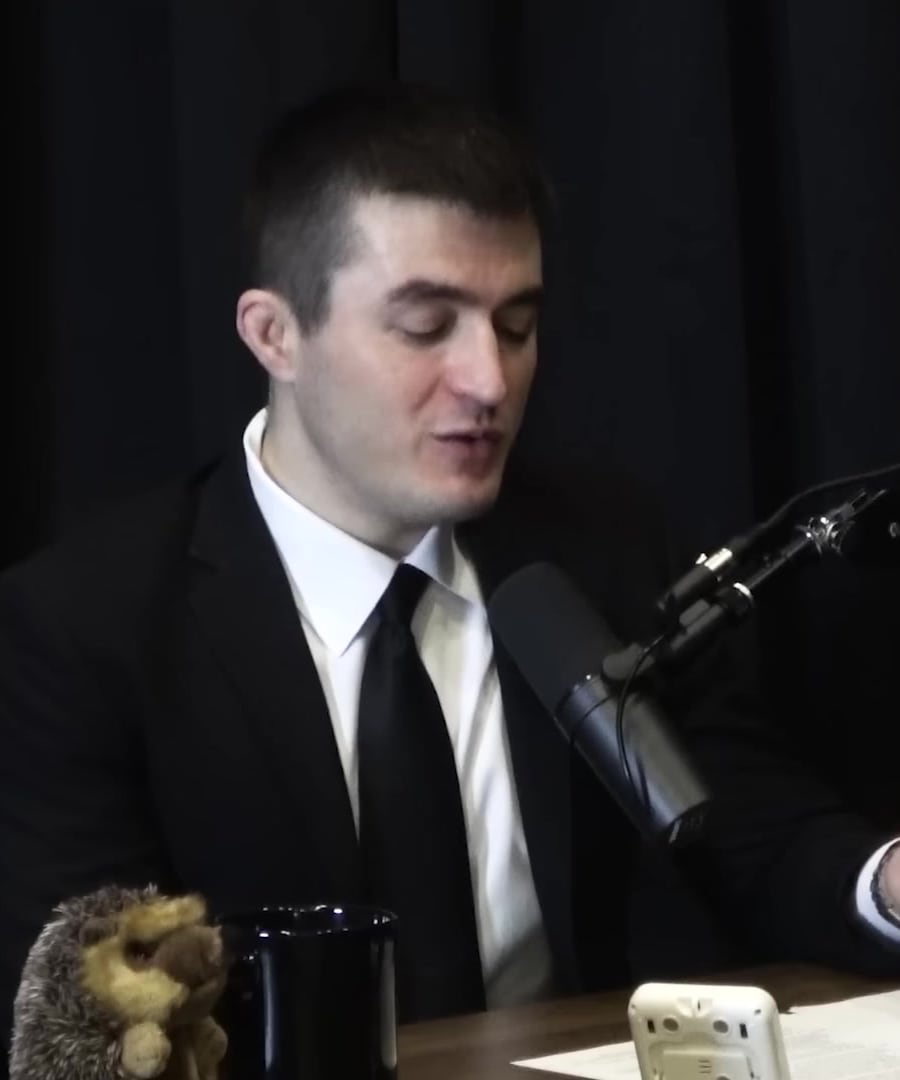
Elon Musk: SpaceX, Mars, Tesla Autopilot, Self-Driving, Robotics, and AI | Lex Fridman Podcast #252

Topics covered
Popular Clips




Questions from this episode
- Asked by 146 people
- Asked by 42 people
- Asked by 42 people
- Asked by 39 people
- Asked by 27 people
- Asked by 11 people
- Asked by 11 people
- Asked by 4 people
- Asked by 4 people
Episode Highlights
Neural Networks
Elon Musk discusses the transformative impact of neural networks on Tesla's self-driving technology. He explains how moving from traditional C++ code to neural networks allows for more efficient data processing, reducing complexity and improving performance. Musk emphasizes the importance of transitioning to raw photon counts for training, which requires a significant overhaul of existing systems.
The idea of going to the Moon is the easy part, but going to the Moon is the hard part.
---
This shift is crucial for creating accurate vector spaces, which are essential for the control systems in autonomous vehicles 1 2 3.
Driving Challenges
The journey to achieving full self-driving capability is fraught with challenges, as Musk reveals. He notes that replicating human perception and decision-making in digital form is more complex than anticipated. The task involves solving intricate perception problems and integrating game-theoretic elements to handle real-world scenarios like four-way stop signs.
I thought the self-driving problem would be hard, but it was harder than I thought.
---
Musk underscores the need for advanced neural networks to mimic human optical sensors and neural processes, which are vital for navigating diverse driving conditions 4 5 6.
Autopilot Evolution
The evolution of Tesla's Autopilot system has been a remarkable journey, marked by both progress and setbacks. Musk highlights the initial skepticism surrounding the feasibility of autonomous driving, given the complexities of computer vision and lane-keeping. Over time, Tesla has transitioned from relying on external systems to developing proprietary hardware and software, which has been pivotal in advancing their technology.
People will give me too much credit, and they'll give Andre too much credit.
---
This shift has been driven by a talented team, including leaders like Andrej Karpathy, who have pushed the boundaries of AI and neural network architectures 7 8 9.
Related Episodes


Dr. Lex Fridman: Machines, Creativity & Love | Huberman Lab Podcast #29
Answers 383 questions
Tim Ferriss: How to Learn Better & Create Your Best Future | Huberman Lab Podcast
Answers 383 questions
Dr. Terry Sejnowski: How to Improve at Learning Using Neuroscience & AI
Answers 383 questionsWelcome to the Huberman Lab Podcast
Answers 383 questions
Ari Wallach: Create Your Ideal Future Using Science-Based Protocols
Answers 383 questionsThe Science of Making & Breaking Habits | Huberman Lab Podcast #53
Answers 383 questions
Using Stem Cells to Cure Autism, Epilepsy & Schizophrenia | Dr. Sergiu Pașca
Answers 383 questions
Dr. Karl Deisseroth: Understanding & Healing the Mind | Huberman Lab Podcast #26
Answers 383 questions
Dr. Jordan Peterson: How to Best Guide Your Life Decisions & Path
Answers 383 questions
Asi Wind: What Magic & Mind Reading Reveal About the Brain
Answers 383 questions