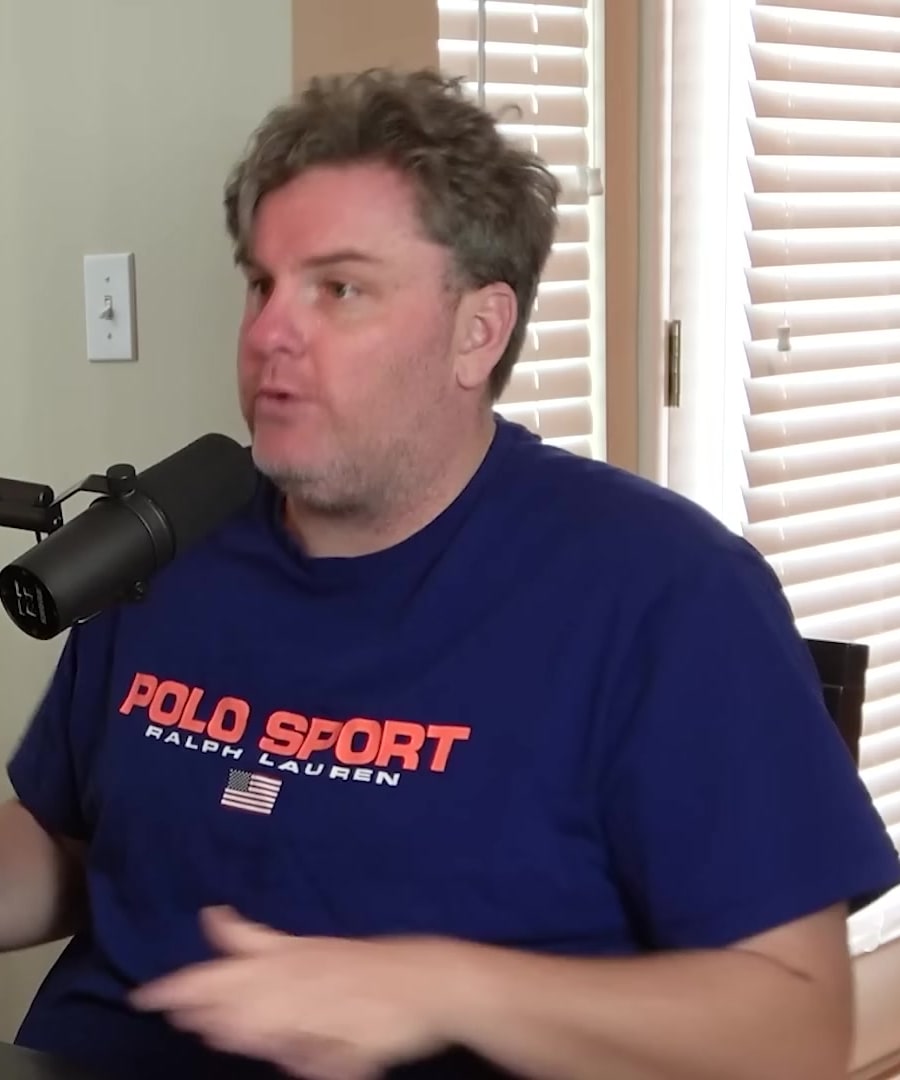
Tim Dillon: Comedy, Power, Conspiracy Theories, and Freedom | Lex Fridman Podcast #156

Topics covered
Popular Clips






Episode Highlights
QAnon Hangover
Tim Dillon humorously compares the aftermath of QAnon to a hangover, suggesting that followers are now waking up to the reality that their beliefs were misguided. He likens it to the day after a wild party, where participants must face the consequences of their actions and move on 1. Dillon describes QAnon as an ever-evolving conspiracy theory, where followers constantly adapt their narratives to fit new events, often leading to absurd conclusions 2.
QAnon, right now is the day after the party. You wake up, it's twelve noon. The sun is hitting you in the face. You're hungover.
---
This improvisational nature of QAnon makes it both entertaining and frustrating, as it can easily turn on its own supporters 2.
Epstein Theories
Tim Dillon shares his belief that Jeffrey Epstein's death was not a suicide, but rather a calculated murder orchestrated by powerful entities. He suggests that Epstein was involved in a complex web of intelligence operations, with ties to both the CIA and Israeli intelligence 3. Dillon argues that Epstein was a functionary within a larger system of control, where powerful individuals were manipulated through blackmail 4.
I think Epstein was really just a functionary. And I think Just Lane was kind of a pimp, and Epstein was kind of a guy that made the money.
---
This perspective highlights the intricate power dynamics at play and the lengths to which some will go to maintain control 4.
Conspiracy Dynamics
Dillon discusses the persistence of conspiracy theories, attributing their appeal to the occasional truths they contain. He questions the official narratives surrounding events like JFK's assassination and 9/11, suggesting that powerful interests often manipulate information for their own gain 5. Dillon also explores the concept of the deep state, describing it as a network of unelected power factions that influence government decisions beyond the public eye 6.
The deep state is only a term for unelected, largely power factions in Washington, DC. That outlive any presidential administration.
---
This examination of power dynamics reveals the complexity of political control and the challenges of discerning truth from manipulation 6.
Related Episodes


Dr. Lex Fridman: Machines, Creativity & Love | Huberman Lab Podcast #29
Answers 383 questions
Tim Ferriss: How to Learn Better & Create Your Best Future | Huberman Lab Podcast
Answers 383 questions
How to Make Yourself Unbreakable | DJ Shipley
Answers 383 questions
Dr. James Hollis: How to Find Your True Purpose & Create Your Best Life
Answers 383 questionsUnderstanding and Using Dreams to Learn and to Forget | Huberman Lab Podcast #5
Answers 383 questionsAMA #17: Making Time for Fitness, Top Sleep Tools & Best Learning Strategies
Answers 383 questionsAMA #14: 2023 Philanthropy, Evening Routine, Light Therapy, Health Metrics & More
Answers 383 questions