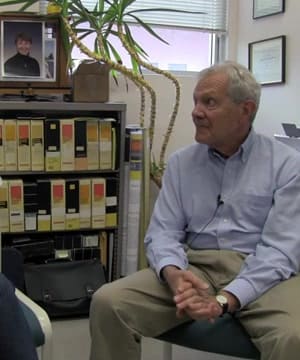
George Brooks, Ph.D. on Lactate Shuttle Theory, Relevance for Traumatic Brain Injury & More

Topics covered
Popular Clips











Questions from this episode
- Asked by 387 people
- Asked by 42 people
- Asked by 17 people
- Asked by 15 people
- Asked by 12 people
- Asked by 11 people
- Asked by 11 people
- Asked by 11 people
- Asked by 10 people
- Asked by 10 people
- Asked by 8 people
- Asked by 7 people
- Asked by 7 people
- Asked by 6 people
Episode Highlights
Early Intervention
Dr. George Brooks highlights the potential benefits of lactate infusion following a traumatic brain injury (TBI). He emphasizes the importance of early intervention, suggesting that administering lactate as soon as possible could be more effective in preventing further brain damage. Brooks also discusses the challenges of obtaining consent for experimental treatments, particularly when patients are in a coma.
I personally think that if we instituted a lactate infusion when the person is admitted to the intensive care unit, that would probably be more helpful.
---
Future research aims to establish lactate infusion as a standard procedure, potentially allowing medics to administer it immediately after an injury 1 2.
Fuel Source
Brooks explains that lactate is preferred over glucose as a fuel source for the brain, especially after a TBI when glucose metabolism is impaired. He describes how lactate can bypass the blocked glycolysis process, providing essential energy to the brain. This glucose-sparing effect allows glucose to be used for other critical functions, such as producing antioxidants.
If glycolysis is blocked and we can augment the total energy supply by giving lactate, that's what we seek to do.
---
This holistic approach aims to nourish both the brain and the body, ensuring that the brain receives adequate fuel even in compromised conditions 3 4.
Medical Applications
The potential applications of lactate in medicine extend beyond TBI treatment. Brooks discusses how lactate could be used in emergency care, such as in car accidents or sports injuries, to mitigate metabolic crises. He also explores the competition between lactate and ketone bodies as fuel sources, noting that lactate often outcompetes ketones for transport into cells.
Lactate is preferred to get in right. It outcompetes because it really fits the transporter configuration better than the other things do.
---
Future research will focus on optimizing lactate formulations and delivery methods to maximize their therapeutic potential 4 5.
Related Episodes

Using Salt to Optimize Mental & Physical Performance | Huberman Lab Podcast #63
Answers 383 questionsHow To Build Endurance In Your Brain & Body | Huberman Lab Podcast #23
Answers 383 questionsSupercharge Exercise Performance & Recovery with Cooling | Huberman Lab Podcast #19
Answers 383 questionsHow to Use Exercise to Improve Your Brain’s Health, Longevity & Performance
Answers 383 questionsNutrients For Brain Health & Performance | Huberman Lab Podcast #42
Answers 383 questions
Dr. Robert Lustig: How Sugar & Processed Foods Impact Your Health
Answers 383 questionsUsing Caffeine to Optimize Mental & Physical Performance | Huberman Lab Podcast 101
Answers 383 questionsUsing Science to Optimize Sleep, Learning & Metabolism | Huberman Lab Podcast #3
Answers 383 questionsHow to Optimize Your Brain-Body Function & Health | Huberman Lab Podcast #30
Answers 383 questionsControl Pain & Heal Faster with Your Brain | Huberman Lab Podcast #9
Answers 383 questions
Dr. Diego Bohórquez: The Science of Your Gut Sense & the Gut-Brain Axis
Answers 383 questions