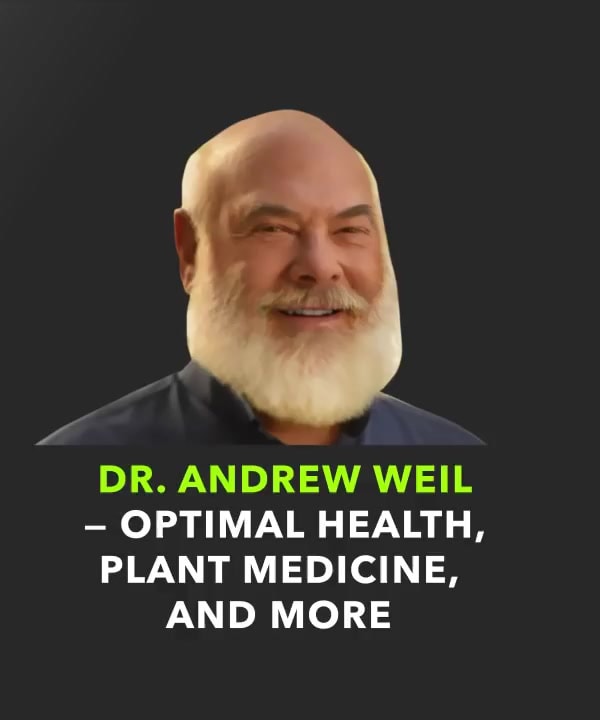
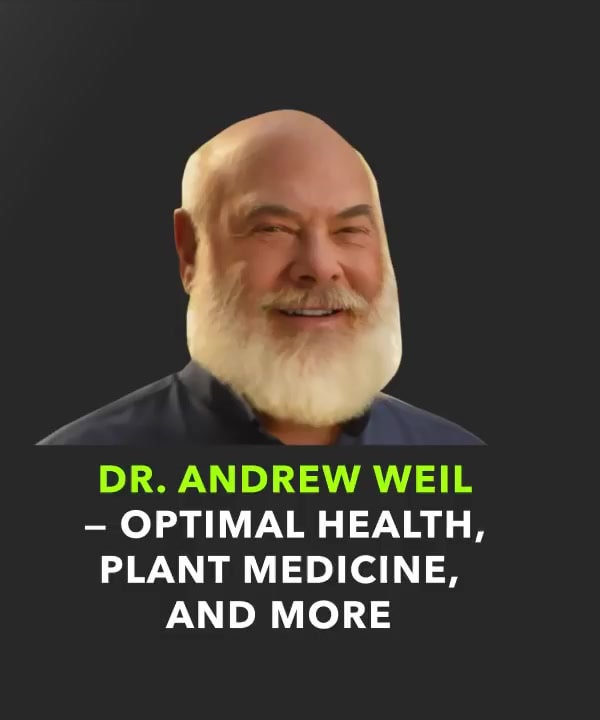
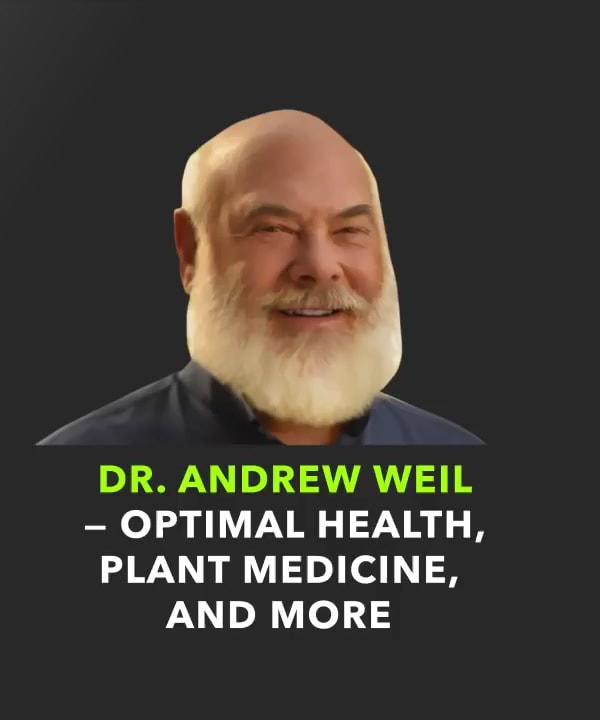
Dr Andrew Weil — Optimal Health, Plant Medicine, and More | The Tim Ferriss Show (Podcast)

Topics covered
Popular Clips








Questions from this episode
- Asked by 559 people
- Asked by 367 people
- Asked by 250 people
- Asked by 172 people
- Asked by 150 people
- Asked by 129 people
- Asked by 115 people
- Asked by 114 people
- Asked by 95 people
- Asked by 94 people
- Asked by 89 people
- Asked by 87 people
- Asked by 84 people
- Asked by 82 people
Episode Highlights
Transformative Experiences
Dr. Andrew Weil recounts his transformative experiences with psychedelics, including a life-changing encounter with LSD that cured his cat allergy. He describes how a single experience with LSD allowed him to pet a cat without any allergic reaction, a change that has persisted ever since 1. Weil also shares his first mescaline experience at Harvard, which initially had no significant psychological effect but later led to profound realizations about the interconnectedness of all things 2.
I had a lifelong allergy to cats...I had no allergic reaction, and I never had one since. So, instant disappearance of allergies.
---
These anecdotes highlight the potential for psychedelics to induce lasting physical and psychological changes.
Therapeutic Potential
Weil explores the therapeutic potential of psychedelics, emphasizing their ability to show patients new possibilities for healing. He recounts how LSD helped him achieve a difficult yoga pose, which he later mastered through continued practice, illustrating the drugs' capacity to reveal new physical capabilities 3. Weil also discusses his early interest in psychedelics, inspired by Aldous Huxley's "The Doors of Perception," and how these substances can alter perception and open up new avenues for treatment 4.
These drugs can show you possibilities that you wouldn't have believed. But then it's up to you to figure out how to have that more of the time.
---
He believes psychedelics have immense potential for treating conditions like autoimmune diseases and cancer.
Expanding Research
Expanding research on psychedelics presents numerous challenges, but Weil remains optimistic about their potential. He recounts his pioneering research on cannabis at Harvard, which concluded that marijuana is a relatively mild intoxicant 5. Weil also highlights the importance of double-blind, placebo-controlled studies while acknowledging their limitations. He argues that personal experience is a valid form of experimentation that can provide useful information 6.
Any change that we can produce in the human organism by giving a pharmacological agent can be exactly mimicked in at least some people some of the time purely by a mind meditation mechanism.
---
Weil advocates for a balanced approach that combines rigorous scientific methods with personal experiential insights.
Related Episodes


How to Improve Your Vitality & Heal From Disease | Dr. Mark Hyman
Answers 383 questions
Tim Ferriss: How to Learn Better & Create Your Best Future | Huberman Lab Podcast
Answers 383 questions
Dr. Karl Deisseroth: Understanding & Healing the Mind | Huberman Lab Podcast #26
Answers 383 questionsLIVE EVENT Q&A: Dr. Andrew Huberman Question & Answer in Toronto, ON
Answers 383 questions
Transform Your Mental Health With Diet & Lifestyle | Dr. Chris Palmer
Answers 383 questionsLIVE EVENT Q&A: Dr. Andrew Huberman at the ICC Sydney Theatre
Answers 383 questions
Dr. Kyle Gillett: Tools for Hormone Optimization in Males | Huberman Lab Podcast 102
Answers 383 questionsLIVE EVENT Q&A: Dr. Andrew Huberman at the Sydney Opera House
Answers 383 questions
Dr. Matthew Hill: How Cannabis Impacts Health & the Potential Risks
Answers 383 questions