249 ‒ How the brain works, Andrew’s fascinating backstory, improving scientific literacy, and more

Topics covered
Popular Clips




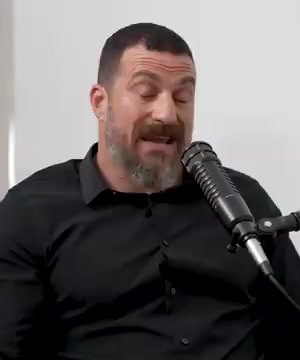

Episode Highlights
Early Years
Andrew Huberman's early years were marked by a blend of academic exposure and a seemingly idyllic childhood. Born in Palo Alto, he grew up in a middle-class neighborhood with a father who was an experimental physicist and a mother who was a stay-at-home teacher 1. His childhood was filled with soccer, swim teams, and a close-knit community of kids. However, things took a drastic turn when his parents divorced, leading him into the underground skateboarding community 2.
My dad moved out, I lived with my mom, my sister went off to college, and at the time I had gotten into skateboarding. I wasn't so much playing soccer and doing other things, and I fell really deeply into the community of skateboarding.
---
This shift marked the beginning of a more turbulent phase in his life.
Teen Turmoil
Andrew's teenage years were fraught with challenges, including a high-conflict home environment and issues with authority. After his parents' divorce, he found himself increasingly involved in skateboarding, which led to interactions with a diverse group of people 2. His home life deteriorated to the point where he was placed in a residential treatment program, an experience he found both confusing and traumatic 3.
I had no idea why I was there. And I remember at the time, I had picked up one skateboard sponsor, which was Spitfire wheels and Thunder trucks. They put me on out of sympathy.
---
Despite these hardships, Andrew's resilience began to show as he navigated through these difficult years.
Career Rise
Andrew's journey from a troubled teenager to a renowned neuroscientist is a testament to his resilience and passion for science. After overcoming significant personal challenges, he pursued higher education with a focus on neuroscience, eventually earning his PhD and completing a postdoc 4. His career flourished at UC San Diego, where he published numerous papers and built a successful lab before returning to Stanford 5.
I started my job just so people know I'm not shy. Professors make about 100,000, 110,000 as assistant starting a professor. And I went from having essentially no responsibility. I bought a little house I could afford, like, this little house. I got a bulldog puppy, and I got a laboratory, and I hired a technician that I knew from Davis, and we just went ham.
---
His story is one of transformation, driven by a deep love for biology and discovery.
Related Episodes

How Your Nervous System Works & Changes | Huberman Lab Podcast #1
Answers 383 questionsHow to Focus to Change Your Brain | Huberman Lab Podcast #6
Answers 383 questionsHow to Optimize Your Brain-Body Function & Health | Huberman Lab Podcast #30
Answers 383 questions
Dr. Gary Steinberg: How to Improve Brain Health & Offset Neurodegeneration
Answers 383 questionsHow to Use Exercise to Improve Your Brain’s Health, Longevity & Performance
Answers 383 questions
Dr. David Berson: Your Brain's Logic & Function | Huberman Lab Podcast #50
Answers 383 questionsLIVE EVENT Q&A: Dr. Andrew Huberman at the Sydney Opera House
Answers 383 questions
Dr. Diego Bohórquez: The Science of Your Gut Sense & the Gut-Brain Axis
Answers 383 questionsHow To Build Endurance In Your Brain & Body | Huberman Lab Podcast #23
Answers 383 questionsNutrients For Brain Health & Performance | Huberman Lab Podcast #42
Answers 383 questionsUnderstand & Improve Memory Using Science-Based Tools | Huberman Lab Podcast #72
Answers 383 questions
Dr. Karl Deisseroth: Understanding & Healing the Mind | Huberman Lab Podcast #26
Answers 383 questions