Dr. Andrew Huberman — The Foundations of Physical and Mental Performance

Topics covered
Popular Clips





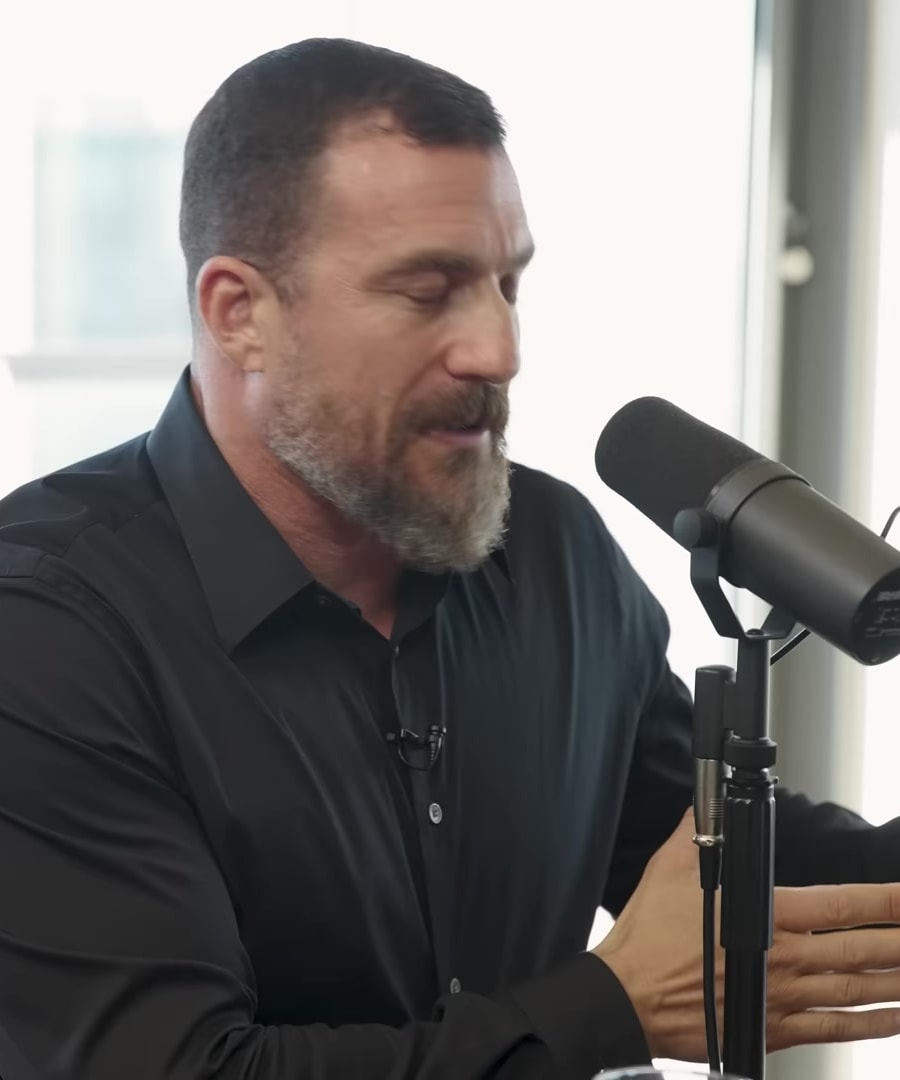








Questions from this episode
- Asked by 3,071 people
- Asked by 1,335 people
- Asked by 1,081 people
- Asked by 1,037 people
- Asked by 1,037 people
- Asked by 900 people
- Asked by 778 people
- Asked by 618 people
- Asked by 617 people
- Asked by 574 people
- Asked by 520 people
- Asked by 497 people
- Asked by 435 people
- Asked by 389 people
- Asked by 350 people
Episode Highlights
Strength Training
emphasizes the importance of strength training, focusing on exercises like tibialis raises, calf raises, and glute ham raises. He highlights the significance of maintaining balance in muscle development, particularly between the tibialis and calves, to prevent injuries and improve performance 1. explains that training should include sets to failure, as taught by Mike Menser, to maximize muscle growth and strength 2.
TIB work is a game changer. It largely hinges on TIB work and quality posterior chain work, like things like Nordic curls.
---
Additionally, he underscores the importance of neck training for overall posture and psychological benefits, noting that a strong neck contributes to a strong spine and improved confidence 3.
Cardio Workouts
Cardiovascular workouts are a crucial component of 's fitness routine, with a focus on endurance and high-intensity training. He describes his Sunday routine as a day dedicated to endurance, often involving long, slow jogs or hikes with a weight vest to build stamina and resilience 4. This approach helps him adapt to physical challenges and improve cardiovascular health.
The specific goal of that day is endurance. Just keep going.
---
On Fridays, he incorporates high-intensity interval training (HIIT) to boost his VO2 max and engage fast-twitch muscle fibers, using exercises like sprints on an assault bike and jump squats 5.
Exercise Adaptations
discusses the body's ability to adapt to various exercise regimens, emphasizing the importance of flexibility in workout routines. He shares his experience of overcoming flat feet and achieving multiple exercise adaptations simultaneously, which he previously thought was impossible 6. This adaptability is crucial for continuous improvement and avoiding plateaus.
I tend to like to do things pretty subjectively when it comes to exercise.
---
Huberman also highlights the need for flexibility in scheduling workouts, allowing for adjustments based on travel or personal commitments, while maintaining consistency in cardiovascular and strength training 7.
Related Episodes

LIVE EVENT Q&A: Dr. Andrew Huberman Question & Answer in Toronto, ON
Answers 383 questionsHow To Build Endurance In Your Brain & Body | Huberman Lab Podcast #23
Answers 383 questionsLIVE EVENT Q&A: Dr. Andrew Huberman at the ICC Sydney Theatre
Answers 383 questionsLIVE EVENT Q&A: Dr. Andrew Huberman at the Sydney Opera House
Answers 383 questionsLIVE EVENT Q&A: Dr. Andrew Huberman Question & Answer in Melbourne, AU
Answers 383 questionsLIVE EVENT Q&A: Dr. Andrew Huberman at the Brisbane Convention & Exhibition Centre
Answers 383 questionsThe Science of Making & Breaking Habits | Huberman Lab Podcast #53
Answers 383 questions
Ido Portal: The Science & Practice of Movement | Huberman Lab Podcast #77
Answers 383 questions
Dr. Karl Deisseroth: Understanding & Healing the Mind | Huberman Lab Podcast #26
Answers 383 questions
Dr. Paul Conti: How to Improve Your Mental Health | Huberman Lab Guest Series
Answers 383 questions