Journal Club with Dr. Peter Attia | Effects of Light & Dark on Mental Health & Treatments for Cancer

Topics covered
Popular Clips
Questions from this episode
- Asked by 2,153 people
- Asked by 815 people
- Asked by 806 people
- Asked by 657 people
- Asked by 428 people
- Asked by 390 people
- Asked by 379 people
- Asked by 347 people
- Asked by 347 people
- Asked by 261 people
- Asked by 235 people
- Asked by 215 people
- Asked by 212 people
- Asked by 209 people
- Asked by 185 people
Episode Highlights
Circadian Rhythms
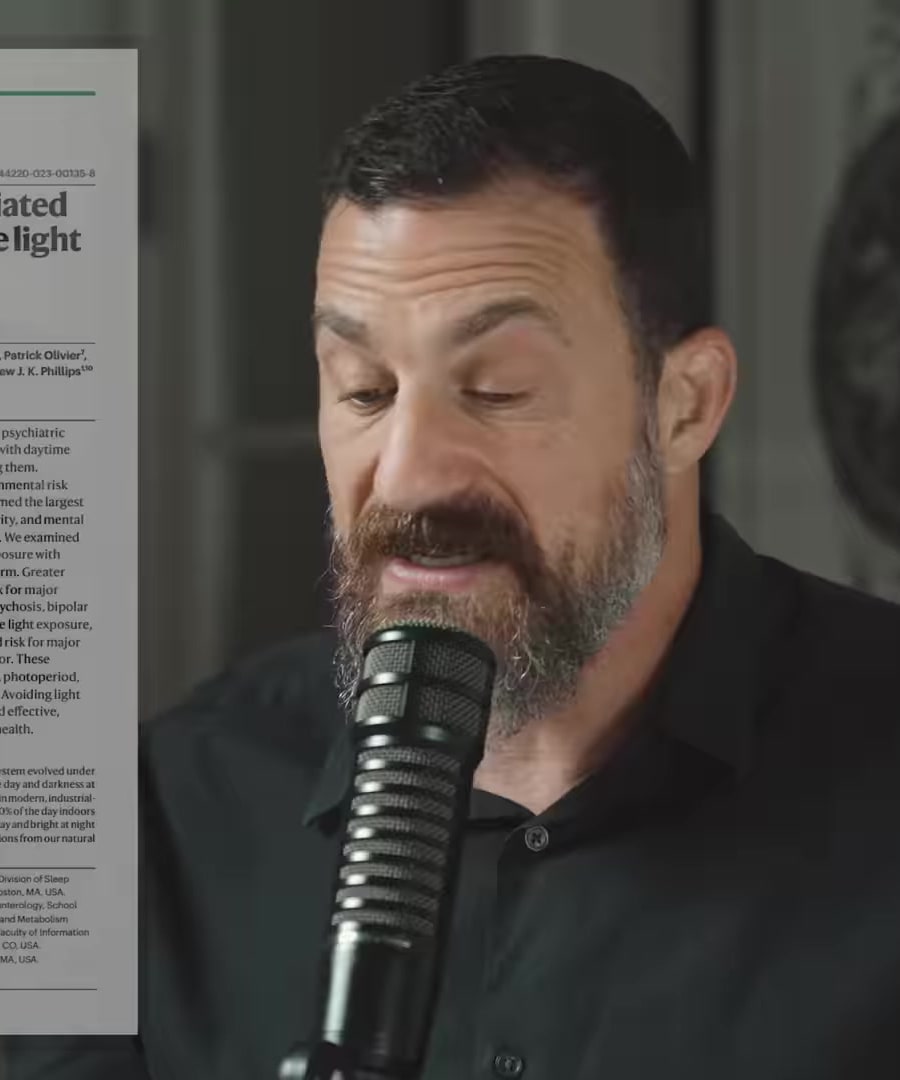
Understanding circadian rhythms is crucial for mental health. emphasizes the importance of natural daylight and night-dark rhythms, noting that disruptions can lead to severe psychiatric issues, including increased suicide risk 1. He explains that morning sunlight boosts the amplitude of the morning cortisol spike, which is beneficial for overall health 1. Peter Attia1.
Daytime Light Benefits
Daytime light exposure has significant benefits for mental health. discusses a study showing that increased sunlight during the day improves mood, sleep, and circadian rhythms 2. He advises getting at least ten minutes of sunlight in the morning and evening to maximize these benefits 3. Peter Attia3.
Nighttime Darkness
Nighttime darkness is equally important for mental health. explains that dark exposure at night can improve mental health outcomes, even if daytime light exposure is insufficient 4. He highlights a study showing that increased nighttime light exposure worsens symptoms of major depressive disorder and bipolar disorder 5. This underscores the need for minimizing light exposure at night to enhance mental well-being.
Practical Applications
Practical applications of these findings can enhance daily life. Andrew Huberman6. He believes that 65-75% of the benefits are directly due to light exposure, though behaviors also play a role 7. These insights can help individuals optimize their light exposure for better mental health.
Related Episodes

AMA #14: 2023 Philanthropy, Evening Routine, Light Therapy, Health Metrics & More
Answers 383 questionsMental Health Toolkit: Tools to Bolster Your Mood & Mental Health
Answers 383 questionsUsing Science to Optimize Sleep, Learning & Metabolism | Huberman Lab Podcast #3
Answers 383 questions
Dr. Matthew Hill: How Cannabis Impacts Health & the Potential Risks
Answers 383 questionsBenefits & Risks of Peptide Therapeutics for Physical & Mental Health
Answers 383 questions
Dr. Chris Palmer: Diet & Nutrition for Mental Health | Huberman Lab Podcast #99
Answers 383 questions
Dr. Karl Deisseroth: Understanding & Healing the Mind | Huberman Lab Podcast #26
Answers 383 questionsA Science-Supported Journaling Protocol to Improve Mental & Physical Health
Answers 383 questions